
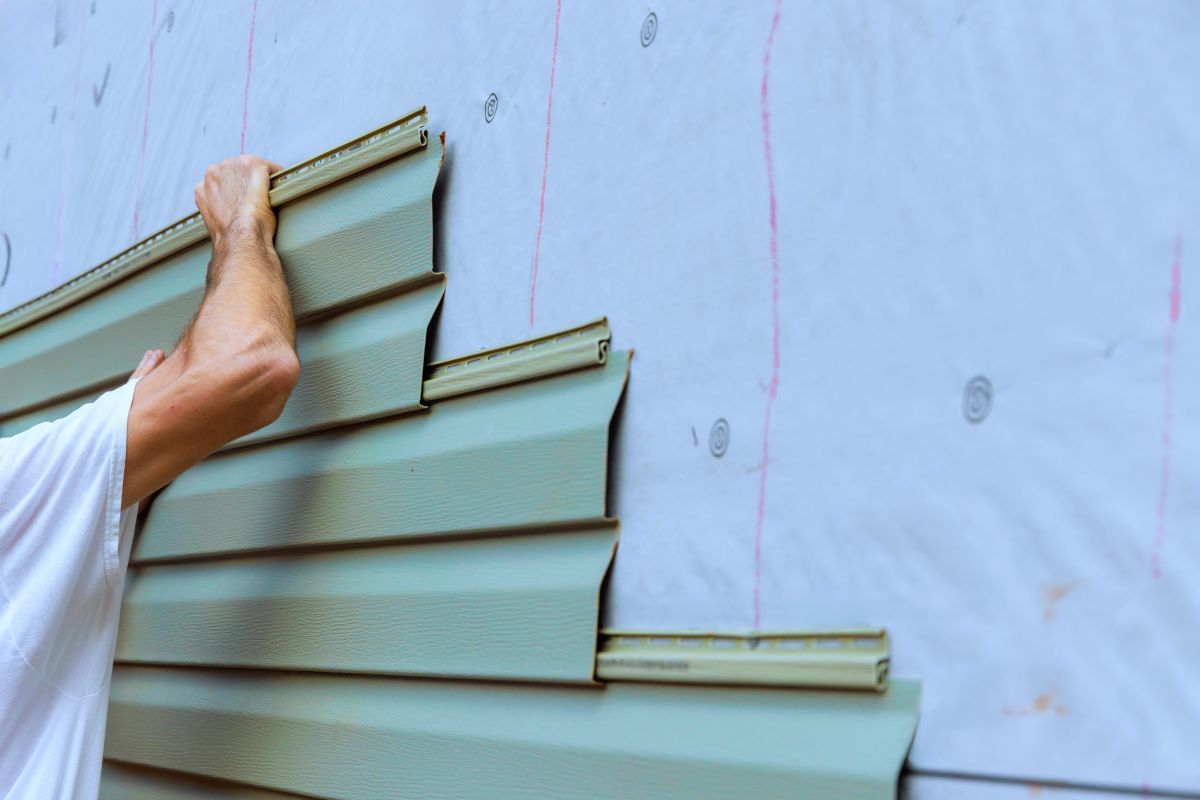
Best Siding for a House in a Cold Climate
Most “best siding” guides leave you with the conclusion that fiber cement (James Hardie) is the answer. That’s the myth. For a lot of houses in cold climates like Maple Grove’s, fiber cement is overkill — and for some specific situations, it’s actually the wrong choice.
The honest answer depends on what kind of cold-climate exposure your house has, what your priorities are (cost, look, longevity, maintenance), and how the install will be detailed. This guide bypasses the marketing default and gives you the real decision matrix.
The Cold-Climate Siding Decision Has More Variables Than Marketing Suggests
“Cold climate” in Maple Grove specifically means:
- 50+ freeze-thaw cycles per year
- Sustained sub-zero temperatures in January-February (sometimes -25°F+ overnight)
- Heavy snow load and ice formation
- Intense summer thunderstorms with hail
- Significant UV exposure in summer
- High humidity swings (lake-effect amplifies this near Lake Minnetonka edges)
Different siding materials handle these stressors differently. The “best” siding is the one that handles the specific combination your house faces, at a cost that makes sense for your situation.
The Top Cold-Climate Contenders
1. Fiber Cement (James Hardie)
Cold performance: Excellent. Dimensionally stable across full temperature range. Doesn’t crack from freeze-thaw. Inorganic core doesn’t absorb moisture.
Trade-offs: Highest cost, install temperature guidelines (some products specify install above 40°F), heavy weight, silica dust at cuts.
Cost (avg MG home): $22,000-40,000.
2. LP SmartSide (Engineered Wood)
Cold performance: Very good. Treated wood substrate resists freeze-thaw. Lighter than fiber cement (easier winter install). Real wood look.
Trade-offs: Shorter paint cycle than Hardie (10-15 vs 15-20 yrs). Class B fire rating (vs Class A for Hardie). Wood-based core could in theory be vulnerable to woodpeckers (rare in practice).
Cost (avg MG home): $16,000-30,000.
3. Premium Insulated Vinyl
Cold performance: Good (premium grade); poor (builder-grade thin vinyl). Foam-backed insulated vinyl actually adds R-value to the wall — a real winter benefit.
Trade-offs: Can become brittle in deep cold; can soften at heat sources in summer; color options limited to manufacturer palette; up-close look more synthetic than wood-based options.
Cost (avg MG home): $12,000-22,000 (premium grade); $8,000-15,000 (standard).
4. Real Cedar Shake / Wood Siding
Cold performance: Variable. Real cedar is beautiful but requires maintenance: staining/sealing every 3-5 years to handle Minnesota freeze-thaw. Without maintenance, lifespan drops dramatically.
Trade-offs: High maintenance burden. Real wood — vulnerable to pests, woodpeckers, and rot if not maintained. Premium look that doesn’t translate to all neighborhoods.
Cost (avg MG home): $20,000-45,000+.
5. Aluminum or Steel Lap Siding
Cold performance: Good. Dimensionally stable in temperature swings. Aluminum hail-dents easily; steel is more impact-resistant.
Trade-offs: Look is dated on most residential homes. Better for modern or industrial-style architecture. Sound differences (rain noise more noticeable).
Cost (avg MG home): $14,000-28,000.
Cold-Climate Siding Comparison
| Material | Cold performance | Maintenance burden | Lifespan | Cost (avg) | Cold-install ease | Best for |
|---|---|---|---|---|---|---|
| James Hardie | Excellent | Light (paint cycle) | 30-50 yrs | $22k-40k | Limited <40°F | Premium homes, long-term ownership |
| LP SmartSide | Very good | Light (paint cycle) | 25-40 yrs | $16k-30k | Excellent | Most Maple Grove homes |
| Premium vinyl | Good | Very light | 20-30 yrs | $12k-22k | Excellent | Cost-optimized projects |
| Cedar shake | Variable | High (stain/seal) | 20-40 yrs (maintained) | $20k-45k | Limited <40°F | Aesthetic-priority homes |
| Steel lap | Good | Very light | 30-50 yrs | $18k-28k | Excellent | Modern style homes |
The Often-Ignored Factor: Wall Assembly
The siding sits on top of a wall system. Cold-climate performance depends on the whole assembly:
- Weather-resistant barrier (Tyvek, Typar, etc.). Stops bulk water; lets vapor through. Must be properly lapped and taped.
- Flashing details. Window head flashing, sill pans, kick-out flashings at roof-to-wall transitions. Cold climates are unforgiving of bad flashing.
- Insulation behind the sheathing. R-value of the wall affects how much condensation risk you have at the back of the siding.
- Vapor barrier (or smart vapor retarder). Inside face of the wall manages moisture movement out of the house.
- Drainage plane. Some modern wall assemblies create an air gap behind the siding for drainage and drying.
A great siding install on a bad wall assembly fails earlier than a mediocre siding install on a great wall assembly. This is why the contractor’s whole-system knowledge matters.
Want help choosing the right siding for your Maple Grove home?
Owl Roofing is a family-owned local team serving Maple Grove and the northwest metro. Free, no-pressure inspections. Honest answers. Real follow-through.
Free consult with material samples — (651) 977-6027 — (651) 977-6027
Cold-Climate Install Mistakes That Shorten Siding Life
- Caulking failures at low temperature. Most caulk needs minimum install temperatures. Winter caulk applied to a cold substrate often fails the next summer.
- Fastener pattern wrong for cold-cycling. Manufacturer spec exists for a reason. Over-driven nails crack Hardie at temperature cycling.
- No expansion gap on vinyl. Vinyl expands and contracts significantly. Tight installs buckle in summer.
- Improper weather-resistant barrier overlap. Water finds gaps; freeze-thaw splits them open.
- Skipped flashing details. Especially kick-out flashings — common skip on builder-grade installs.
The Honest Recommendation for Most Maple Grove Homes
If we had to give a single answer to “what’s the best siding for a house in a cold climate like Maple Grove”:
For most homes: LP SmartSide engineered wood. Strong cold performance, real-wood look, reasonable cost, easy winter install, durable. The sweet spot of the cold-climate siding category.
For premium homes prioritizing maximum lifespan and minimum maintenance: James Hardie fiber cement. The cost premium pays back over 30+ years; the look is right for high-end Maple Grove neighborhoods.
For cost-optimized projects: Premium insulated vinyl from a quality manufacturer. The foam-backed insulation actually adds R-value to your walls — a real winter benefit you can feel.
Related reading
Maple Grove Specific Considerations Worth Knowing
Three patterns we see across hundreds of Maple Grove projects that affect this decision:
Mature tree neighborhoods (Weaver Lake, Rush Creek, Cedar Island): The tree canopy creates more debris, more shade (which slows shingle drying after rain), and more falling branches. Material choices here should weigh durability and debris-shedding higher than aesthetics alone.
Newer subdivisions (Arbor Lakes, Edinburgh USA borders): More wind exposure, less mature landscaping, often more uniform architectural styles. HOA restrictions sometimes apply. The conservative middle of the material range usually fits these neighborhoods best.
Townhomes and shared-wall properties (Reserve, Eaglewood, Boulder Pointe): HOA-managed projects with coordination requirements. Material choices often determined by association rather than individual homeowner. Where homeowner choice exists, lean toward what most matches the existing neighborhood look.
Why Local Expertise Beats Generic Advice
National roofing and siding content frequently misses the Minnesota-specific factors that change the right answer. Snow load. Ice dam dynamics. Freeze-thaw cycles. Hail belt status. Tree species distribution. Window-glass-to-wall ratios common in Maple Grove builds. None of these are weighted heavily in a generic “best of” guide.
When you’re hiring a Maple Grove contractor, you’re hiring someone who has installed hundreds of homes in this specific climate and seen what works at year 5, year 10, and year 20. That field experience translates to better recommendations than any nationally-aggregated review article can deliver.
If you’d like a free consultation with material samples on your actual Maple Grove house, give us a call. We’ll be honest about what we’d recommend for your specific situation — including telling you to stick with what you have if that’s the right answer.
Frequently Asked Questions
What is the best siding for a house in a cold climate?
For most Maple Grove homes, LP SmartSide engineered wood is the best balance of cold performance, real-wood look, cost, and ease of install. For premium homes prioritizing 30+ year lifespan, James Hardie fiber cement is the right call. For cost-optimized projects, premium insulated vinyl performs well.
Does fiber cement siding crack in extreme cold?
No — properly installed fiber cement (James Hardie) is dimensionally stable across Minnesota’s temperature range. Cracking issues come from improper install (over-driven fasteners) or sub-40°F installation conditions, not from cold-cycling in service.
Can vinyl siding handle Minnesota winters?
Premium vinyl handles Minnesota winters well — but builder-grade thin vinyl can become brittle in deep cold. For Maple Grove conditions, choose .046+ inch panels with insulated foam backing. Avoid the thinnest builder-grade options sold at big-box stores.
Is cedar shake siding good for cold climates?
Real cedar shake can perform well in cold climates but requires significant maintenance (staining/sealing every 3-5 years) to handle Minnesota freeze-thaw cycles. Without maintenance, lifespan drops dramatically. For owners willing to maintain it, cedar offers premium curb appeal.
Should I install siding in winter in Maple Grove?
LP SmartSide and most vinyl can be installed year-round in Maple Grove. James Hardie has install temperature guidelines (typically 40°F minimum for some products). For winter siding projects, LP SmartSide and quality vinyl are usually the most practical material choices.
How much does cold-climate siding installation cost in Maple Grove?
Premium vinyl: $12,000-22,000. LP SmartSide: $16,000-30,000. James Hardie: $22,000-40,000. Cedar shake: $20,000-45,000+. Costs vary by home size, complexity, and any wall assembly upgrades needed for cold-climate performance. Get a free Owl Roofing quote for exact pricing.
